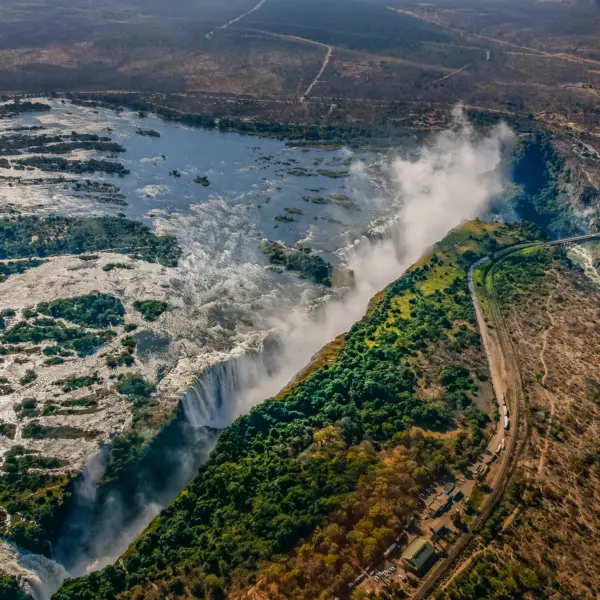
Driving in Zambia opens up long distances between Lusaka, Livingstone and the Copperbelt, letting you break the journey in towns and viewpoints that buses pass by. The road to Victoria Falls is straightforward and rewarding.
With your own 4x4 you can reach national parks like South Luangwa or Lower Zambezi on your own timetable, staying at lodges or camps along the way. It brings flexibility, provided you plan fuel, road conditions and daylight carefully.
At a glance
Drives onLeft
Motorway tollCheck locally
CurrencyZambian Kwacha (ZMW)
Min. rental age21 years
Good to know before you drive
The essentials for a smooth, ticket-free trip.
🚦
Speed limits
Town50 km/h
Open road90 km/h
Motorway130 km/h
🅿️
Parking
Paid short-stay zones in city centres — buy a ticket and display it.
🍷
Alcohol limit
Typically 0.05% blood-alcohol limit; lower for new drivers.
🎫
Vignette / tolls
Check whether a motorway vignette or tolls apply — many rentals include one.
Renting a car? Watch this video first
▶
Why book with us
💸
Save up to 80%
Exclusive negotiated rates from 1,000+ rental companies.
🛡️
No hidden fees
No card or admin charges — every cost shown up front.
🔄
Free cancellation
Change or cancel free up to 24 hours before pick-up.
🎧
24/7 support
Real people, every day of the year, in your language.
What drivers say about Zambia
★★★★★★4.5
★★★★★4
"We visited Zambia with the kids and the car made everything so much easier, from the supermarket run to spotting wildlife. The staff were friendly and patient while we sorted car seats and directions. Only issue was a longer wait at pickup than expected, after a long flight."
T
Thandiwe
Zambia
★★★★★4
"We had a smooth weekend away, car was clean and economical. Only downside was a slightly confusing return area at the airport."
M
Mulenga
Zambia
★★★★★★3.5
"We booked a car together for a road trip and it handled both city roads and rougher stretches well. Booking and collection were straightforward and staff were polite. We did feel the deposit took too long to be released afterwards, which was a bit stressful for our budget."
For Zambia, it is wise to book a rental car at least 2-4 weeks in advance, especially for travel in the dry high season (June to October) and around holidays. In popular areas such as Lusaka, Livingstone and the main safari gateways, 4x4 vehicles and automatics sell out quickly, so earlier booking gives you better choice and more favourable rates.
Most Zambian car-hire companies place a hold on your card at pick-up and release it after the car is checked on return, usually within 3-10 working days. Your bank may then take a few more days to show the funds as available. If there is damage, late return, fines or missing fuel, the relevant costs can be deducted from this deposit.
The excess (deductible) is the maximum amount you pay towards repair or loss if the car is damaged or stolen. In Zambia it typically ranges from about ZMW 5,000 to ZMW 30,000, higher on 4x4s. If a covered incident occurs, the rental company charges up to that amount. You can often reduce the excess significantly, sometimes close to zero, by buying extra insurance or a separate excess-waiver policy.
Most mainstream suppliers in Zambia prefer a credit card in the main driver’s name for the security deposit. Some local firms may accept a debit card or cash, and there are occasional no-deposit, no-credit-card offers with stricter conditions or higher rates. Always check the payment and deposit rules for your chosen deal before booking and before you travel.
Prices vary by season, car type and location. As a guide, a small city car in Zambia often starts around ZMW 600-900 per day, while a mid-size SUV might be ZMW 1,200-1,800. Proper 4x4s for park and rural travel can run from about ZMW 1,800-3,000 per day, sometimes more with camping gear, insurance upgrades or one-way fees included.
Bookingcar lets you compare prices and conditions from many car-rental brands in Zambia in one search, so you can quickly find which company offers the best value for your dates, vehicle type and mileage needs. You see clear side-by-side rates, inclusions and deposit requirements, helping you pick the most economical option without checking dozens of separate websites.
If you return the car late in Zambia, most companies charge an extra fee. This might be billed as additional hours or as a full extra rental day once you pass a grace period, often 30-59 minutes. Repeated delays can increase costs and may affect insurance cover. If you know you will be late, contact the rental office as soon as possible to adjust your booking.
Typical speed limits in Zambia are:
Urban areas: about 50 km/h (sometimes signposted lower near schools and markets)
Open rural roads: usually around 80 km/h where marked
Main highways: often 100 km/h, with lower limits through towns or roadworks
Always follow posted signs, as local limits can change due to construction, safety zones or police controls.
Penalties vary by offence. Common issues like speeding, failing to stop at a red light or not wearing seat belts can lead to on-the-spot fines, typically from around a few hundred to several thousand Zambian kwacha. Serious offences, such as dangerous driving, drunk driving or causing an accident, can involve larger fines, court appearances, licence suspension or even imprisonment.
In Zambia, the legal blood alcohol concentration (BAC) limit for private drivers is generally 0.08%. However, enforcement can be strict, especially around holiday periods and at night checkpoints. Even below the limit, any sign of impaired driving can lead to charges or fines, so it is strongly recommended to avoid drinking altogether if you plan to drive a rental vehicle.
Fuel prices in Zambia are regulated and adjusted periodically. As a recent guideline, petrol and diesel typically cost around ZMW 25-35 per litre, depending on product type and current government pricing. Rural stations can occasionally be higher and have limited supply, so plan ahead for long journeys and fill up in larger towns such as Lusaka, Ndola or Livingstone.
Yes, Zambia has tolls on several main highways and bridges. Charges are usually collected at toll plazas on a per-use basis rather than via a vignette system. Cars and small 4x4s pay lower tariffs than larger vehicles. Toll fees are typically payable in cash (Zambian kwacha) or with accepted electronic methods; keep receipts, as you may pass multiple plazas on longer routes.