Bookingcar
Manage booking
EN · English RU · Русский FR · Français ES · Español DE · Deutsch RO · Română NL · Nederlands CS · Čeština IT · Italiano HR · Hrvatski SK · Slovenčina UK · Українська DA · Dansk SV · Svenska FI · Suomi PT · Português NO · Norsk ET · Eesti HE · עברית JA · 日本語 HU · Magyar PL · Polski BG · Български EL · Ελληνικά SL · Slovenščina AR · العربية TR · Türkçe LV · Latviešu KO · 한국어 LT · Lietuvių SR-LATN · Srpski KA · ქართული
Home Destinations Support About FAQ
Manage booking
Home/Destinations/Bolivia
From €9/day
Explore Bolivia on your own schedule

Car rental in Bolivia

More choice, more flexibility, better prices.

4.5 / 8,764 reviews
Rent a car in Bolivia
✓ No hidden fees · ✓ Free cancellation

Popular cities in Bolivia

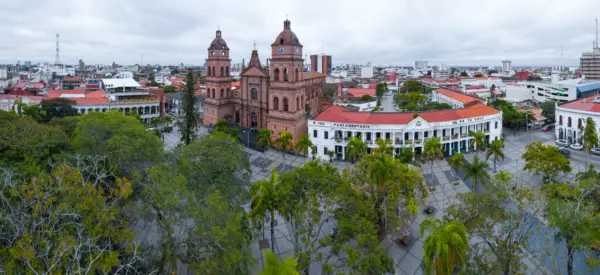
Santa Cruz
Santa Cruz
Cochabamba
Cochabamba
La Paz
La Paz
Santa Cruz De La Sierra

Why drive in Bolivia

Driving in Bolivia opens the way from La Paz to Lake Titicaca, the valleys around Cochabamba and the colonial charms of Sucre and Potosi. Scenic highways climb over high passes and across sweeping altiplano plains.

With your own car you can plan flexible routes towards Uyuni and its salt flats or remote villages in the Yungas. You set the pace, taking time at viewpoints and markets away from fixed tour schedules.

At a glance
Drives onRight
Motorway tollCheck locally
CurrencyBoliviano (BOB)
Min. rental age21 years

Good to know before you drive

The essentials for a smooth, ticket-free trip.

🚦

Speed limits

Town50 km/h
Open road90 km/h
Motorway130 km/h
🅿️

Parking

Paid short-stay zones in city centres — buy a ticket and display it.

🍷

Alcohol limit

Typically 0.05% blood-alcohol limit; lower for new drivers.

🎫

Vignette / tolls

Check whether a motorway vignette or tolls apply — many rentals include one.

Watch our video
Renting a car?
Watch this video first

Why book with us

💸
Save up to 80%
Exclusive negotiated rates from 1,000+ rental companies.
🛡️
No hidden fees
No card or admin charges — every cost shown up front.
🔄
Free cancellation
Change or cancel free up to 24 hours before pick-up.
🎧
24/7 support
Real people, every day of the year, in your language.

Practical Information for Drivers

Traffic Laws

To keep your driving experience positive when travelling on the roads of Bolivia, you should comply with local regulations. However, there are not many police officers in the country, so you would have to be quite unlucky to receive a fine. This has its pros and cons, as it applies equally to foreign tourists and local drivers. It is a fact that the way some Bolivian drivers observe the rules of the road can cause accidents, so you need to exercise caution and remain vigilant.

The basic rules of the road in Bolivia are:

  • drive on the right; overtaking is permitted only on the left;
  • seat belts must be worn by everyone in the vehicle, from the driver to passengers in the rear seats;
  • dipped headlights must be used in the evening, at night and in poor visibility;
  • in the mountainous regions of Bolivia, winter tyres are mandatory in cold conditions;
  • the use of a mobile phone while driving is prohibited.

Allowable alcohol

The permissible blood alcohol level is 0.5 ‰. However, given the terrain — the foothills and mountainous relief — you should drive extremely carefully on the roads of this country. In addition, the often chaotic movement of vehicles and pedestrians means you must not lose concentration, and alcohol is known to reduce it. In Bolivia, you need to take responsibility for your own safety.

Parking

In this respect there is almost complete freedom. You can leave the car anywhere you like where there are no road signs or road markings prohibiting parking.

What drivers say about Bolivia

4.5
5

"We travelled as a family with two kids and the car was perfect for the altiplano roads. Pick‑up was quick, child seats ready, and staff kindly explained local driving tips. No hidden fees at return."

C
Carlos Alberto Quispe Mamani
Bolivia
5

"We booked as a couple for a week in Bolivia and everything went smoothly. The car was clean, fuel‑efficient and ideal for both city and mountain drives. Only wish the pick‑up desk signage at the airport was a bit clearer, but staff were very helpful once we found it."

M
María Fernanda Arce López
Bolivia
5

"We were a group of friends road‑tripping Bolivia; car was reliable, paperwork fast and staff friendly. Great value and no issues on return."

J
José Luis Choque Flores
Bolivia
More reviews →

Renting in Bolivia — FAQ

Booking 2–4 weeks before arrival in Bolivia is usually enough, but in peak periods such as Christmas, Easter, public holidays and the dry season (May–September) it is safer to reserve 6–8 weeks ahead. In remote areas like Uyuni or Rurrenabaque, book as early as possible because fleets are small and 4x4s sell out quickly.
The deposit is normally a pre-authorisation on your card rather than a charge. After you return the car in good condition, most Bolivian rental companies release it within 3–7 working days, but your bank may take up to 14 days to show the funds as available. Check your voucher for exact timings and any fees.
The excess is the maximum amount you must pay if the car is damaged or stolen. In Bolivia it commonly ranges from about BOB 3,000 to BOB 12,000, depending on vehicle type and supplier. The insurer covers costs above that amount. You can often reduce the excess, sometimes close to zero, by adding extra protection when booking.
Most Bolivian suppliers require a main driver credit card for the deposit, and debit or cash is usually not accepted at the desk. However, through intermediaries you may occasionally find special no-deposit or no-credit-card offers, often with higher rates and stricter conditions. Always read the payment and deposit rules shown for each specific deal.
Typical prices for a small car in Bolivia start around BOB 220–320 per day, rising to BOB 400–650 for SUVs and 4x4s popular on routes like Uyuni or the Altiplano. Costs vary with season, location, insurance cover and mileage limits. Longer rentals often work out cheaper per day than short bookings of one or two days.
Bookingcar lets you compare prices from multiple Bolivian and international rental brands in one search, helping you quickly find a cheaper or better-value option. You can see different vehicle types, insurance options and mileage limits side by side, so it is easier to select the most suitable and cost-effective offer for your trip.
Returning late in Bolivia usually leads to extra charges. Most companies allow a short grace period, then bill additional hours or a full extra day, often at the local counter rate plus fees. Being very late can also affect insurance cover. If you know you will be delayed, contact the rental office as early as possible to discuss options.
Typical Bolivian speed limits are:
  • Urban areas: about 40–50 km/h, lower near schools and markets
  • Rural roads: about 70–80 km/h, depending on conditions
  • Main highways: about 80–90 km/h where signposted
Always follow posted signs, as limits can change due to roadworks, mountain passes, unpaved sections or local municipal rules.
Fines vary by city and offence. Speeding, ignoring red lights, not wearing seat belts or using a phone while driving usually result in on-the-spot fines that can be several hundred bolivianos, higher for serious cases. Dangerous driving, drunk driving or accidents causing injury may lead to very large fines, vehicle impoundment and possible criminal charges.
The general legal blood alcohol limit in Bolivia is 0.05% (0.5 g/l). Police checkpoints are common, especially at night and on intercity routes. Penalties for exceeding the limit can include heavy fines, licence suspension, vehicle impoundment and, in serious cases or after accidents, criminal prosecution. The safest option in Bolivia is not to drink at all before driving.
Fuel prices in Bolivia are partly regulated and can differ for foreign-plated vehicles. As a guide, petrol for tourists is often around BOB 6–9 per litre at official stations, while locals may pay subsidised rates. Remote regions may have higher prices or limited availability, so it is sensible to fill up before long journeys on rural or mountain roads.
Yes. Many major highways in Bolivia have toll booths (peajes) where you pay per use in cash, usually a small amount in bolivianos for each vehicle category. There is no national vignette system. Keep some small notes and coins handy, and always take the receipt. Toll plazas are common on intercity routes heading into or out of large cities.

Ready to explore Bolivia?

Compare live prices across Bolivia.