Bookingcar
Manage booking
EN · English RU · Русский FR · Français ES · Español DE · Deutsch RO · Română NL · Nederlands CS · Čeština IT · Italiano HR · Hrvatski SK · Slovenčina UK · Українська DA · Dansk SV · Svenska FI · Suomi PT · Português NO · Norsk ET · Eesti HE · עברית JA · 日本語 HU · Magyar PL · Polski BG · Български EL · Ελληνικά SL · Slovenščina AR · العربية TR · Türkçe LV · Latviešu KO · 한국어 LT · Lietuvių SR-LATN · Srpski KA · ქართული
Home Destinations Support About FAQ
Manage booking
Take the best deals with you.
Download on theApp Store GET IT ONGoogle Play
Home/Destinations/Brazil
From €9/day
Explore Brazil on your own schedule

Car rental in Brazil

Great cars, affordable prices, and easy booking process.

★★★★★★ 4.5 / 8,764 reviews
Rent a car in Brazil
✓ No hidden fees · ✓ Free cancellation

Popular cities in Brazil

Sao Paulo
Sao Paulo
Rio De Janeiro
Rio De Janeiro
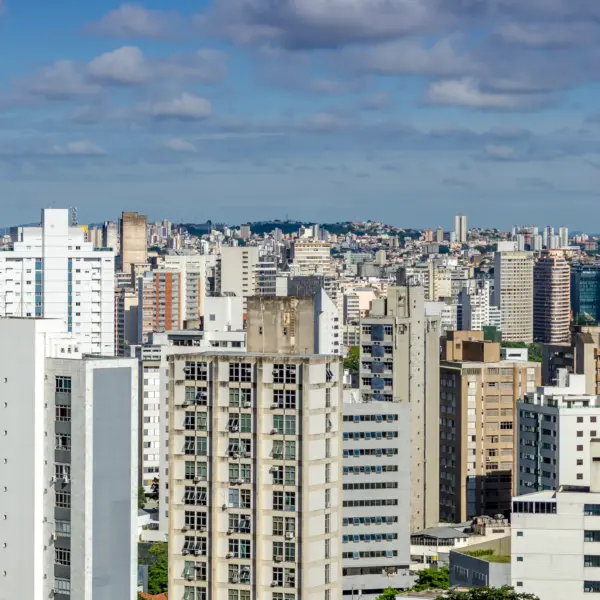
Belo Horizonte
Belo Horizonte
Campinas
Campinas

Why drive in Brazil

Driving in Brazil opens classic routes like Rio to Paraty along the Costa Verde or Sao Paulo to the mountain town of Campos do Jordao. Highways link big cities to beaches, hills and colonial centres.

With your own car you can explore the vineyard roads of Rio Grande do Sul, Minas Gerais historic towns or the dunes around Jericoacoara. Choose your own rhythm, stopping for viewpoints and village cafes.

At a glance
Drives onRight
Motorway tollToll roads (pay per use)
CurrencyBrazilian Real (BRL)
Min. rental age21 years

Good to know before you drive

The essentials for a smooth, ticket-free trip.

🚦

Speed limits

Town50 km/h
Open road90 km/h
Motorway130 km/h
🅿️

Parking

Paid short-stay zones in city centres — buy a ticket and display it.

🍷

Alcohol limit

Typically 0.05% blood-alcohol limit; lower for new drivers.

🎫

Vignette / tolls

Check whether a motorway vignette or tolls apply — many rentals include one.

Watch our video
Renting a car?
Watch this video first
▶

Why book with us

💸
Save up to 80%
Exclusive negotiated rates from 1,000+ rental companies.
🛡️
No hidden fees
No card or admin charges — every cost shown up front.
🔄
Free cancellation
Change or cancel free up to 24 hours before pick-up.
🎧
24/7 support
Real people, every day of the year, in your language.

Practical Information for Drivers

Fines

A new penalty system has been in use in Brazil since 2009. Drivers who commit serious traffic violations can be punished with a fine or imprisonment. Penalty points are also awarded - when their number reaches the maximum limit, the driver is deprived of their licence and has to obtain it again.

Violation

Fine

Parking in an unauthorised location

300-450 pesos

Speeding

300-2000 pesos

Using a mobile device while driving

300 pesos

Not wearing a seat belt

300 pesos

Driving through a red light

670 pesos

Drink-driving

3350 pesos (in some cases - imprisonment from 6 months to 3 years)

Inspectors on Brazilian roads are rare - traffic is monitored by special cameras and speed radars. When renting a car in Brazil, you must be prepared for the fact that local drivers often do not follow traffic rules and may overtake or drive through red lights.

Speed Limits

In Brazil, speed limit rules are less strict than in some other countries:

  • The maximum speed in built-up areas must not exceed 60 km/h;
  • On motorways, general traffic may move at a speed of up to 120 km/h, but no more.

Drivers are advised to be very careful because of the extensive use of active speed radar monitoring.

Parking: what you need to know when travelling by car in Brazil

Parking space in Brazil is a real problem - there is an acute shortage. Local drivers often leave vehicles wherever they like: blocking the central part of the road, "propping up" other cars, etc. Many offices and organisations have their own car parks. Many car parks are located underground. In areas with a sign in the form of a crossed-out letter "E" parking is prohibited. If a parking area is marked "azul", it means it is only for owners of special cards.

Most city parking is paid, with varying rates:

  • 1 hour in a busy central area - 10 USD;
  • 1 hour in a remote area - 2-3 USD.

In large parking areas, staff help you find a space and issue a receipt for payment, but they are not responsible for the safety of the vehicle.

The cost of fuel

The country has average fuel prices for both petrol and diesel. You can expect approximately the following:

  • 1 litre of petrol will cost 1.06 USD;
  • 1 litre of diesel fuel costs about 2 USD.

Typically, in more developed countries fuel prices are higher, while in less developed or oil-exporting countries prices are lower.

Toll roads

There are toll roads in the country that are under private management. Opinions about them are mixed, as the cost of using toll roads is quite high. For example, a driver will have to spend about $60 to go from Rio de Janeiro to Sao Paulo. As for the benefits, toll roads are always of high quality and are called "green".

What drivers say about Brazil

★★★★★★4.5
★★★★★ 5

"We landed in São Paulo tired and hungry, but picking up the car was super quick and the staff were friendly. The car was clean, nearly new and perfect for our road trip. booking car made everything smooth and stress‑free."

G
Gabriel Henrique Almeida
Brazil
★★★★★ 5

"I booked a compact car in Rio through bookingcar and was really impressed. Clear instructions, quick pickup and the car was in excellent condition, with good fuel economy. Only wish there had been a phone holder, but overall it was a great, hassle‑free rental experience."

M
Mariana dos Santos Oliveira
Brazil
★★★★★★ 4.5

"I travelled with a friend and Bookingcar was easy to use, car great, just a bit slow at drop‑off."

R
Rafael Costa Pereira
Brazil
More reviews →

Renting in Brazil — FAQ

For Brazil, it is wise to reserve a car 3–6 weeks before your trip, and even earlier (6–8 weeks) for New Year, Carnival, major festivals, or school holidays. Booking early helps you secure lower rates and a wider choice of vehicles, especially in busy locations like Rio de Janeiro, Sao Paulo, Salvador, Recife, and popular beach destinations.
The deposit is normally pre-authorised on your card at pick-up and released after the car is inspected on return. Brazilian and international banks usually take 3–10 working days to unblock the amount. With some no-deposit or low-deposit offers, the blocked sum is smaller or not taken, but terms vary by supplier and card issuer.
The excess is the maximum amount you must pay if the car is damaged or stolen. In Brazil it often ranges from about R$1,500 to R$5,000, depending on car class and supplier. If repair costs are lower, you pay only that amount. You can reduce the excess, sometimes close to zero, by purchasing additional protection or full-cover insurance.
Most Brazilian rental firms require a major credit card in the main driver’s name for the deposit. Some partners offer no-deposit or no-credit-card style deals, sometimes accepting debit cards with sufficient limit and proof of income. These options are more common in big cities and for smaller car groups, and usually involve stricter checks and conditions.
Prices vary by season and city, but a small economy car typically costs around R$100–R$180 per day with basic cover and limited extras. During Carnival, New Year, or major events, rates can rise significantly. Larger vehicles, automatics, and SUVs in tourist hotspots often cost more, so compare options and book early for the best value.
Bookingcar specialises in comparing prices from many car hire companies in Brazil, from major international brands to trusted local firms. By showing options side by side, it helps you quickly spot cheaper deals, included extras, and differing conditions, so you can choose the best-value offer for your dates and locations without checking multiple websites.
Returning the car late in Brazil usually leads to extra charges. Many suppliers allow a short grace period, such as 29–59 minutes, but after that they may charge by the extra hour or a full additional rental day. Consistent late return can also affect future rentals. Always contact the rental office in advance if you expect any delay.
Typical limits in Brazil are:
  • Urban streets: around 40–60 km/h (check local signs)
  • Main urban avenues: usually 60–70 km/h
  • Rural roads (single carriageway): generally 60–80 km/h
  • Highways (rodovias) near cities: often 80–100 km/h
  • Intercity highways: commonly up to 110 km/h, sometimes 120 km/h where posted
Always follow the posted limit, as cameras are frequent.
Brazil uses a points and fine system. Fines range from about R$88 for minor offences (light speeding) to over R$1,400 for serious violations like drink-driving. Points are added to the driver’s licence, and accumulating too many can lead to suspension. Rental firms may also charge administrative fees for processing fines and toll notices.
Brazil has effectively a zero-tolerance policy for drink-driving. Any measurable alcohol can lead to penalties, with enforcement starting from about 0.05 mg of alcohol per litre of breath. Sanctions include high fines, suspension of driving rights, and possible arrest in serious cases. The safest approach is not to drink at all if you plan to drive.
Fuel prices vary by state and city. As a rough guide, recent average prices are around R$5.50–R$6.50 per litre for petrol (gasolina) and slightly lower for ethanol (etanol). Diesel usually sits in a similar or slightly higher range. Prices at highway service stations and in remote areas may be noticeably higher than in large cities.
Yes, many major highways in Brazil, especially in states like Sao Paulo, Rio de Janeiro, and Parana, use per-use toll plazas. You pay each time you pass a toll point, either in cash (Brazilian reais) or via an electronic tag (such as Sem Parar), which some rental cars already have. The rental company may add service fees for electronic toll use.

Ready to explore Brazil?

Compare live prices across Brazil.